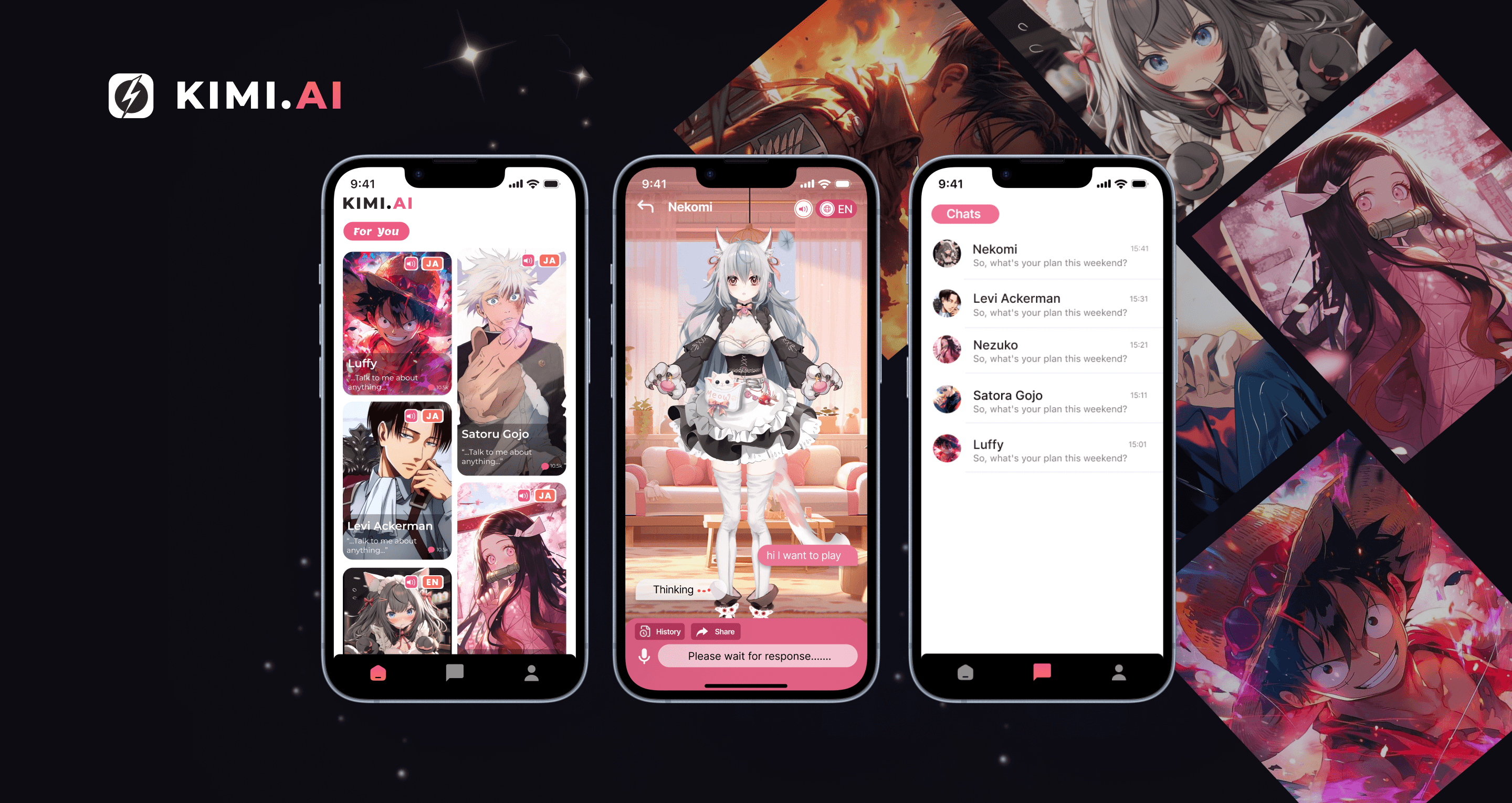
How to make an AI
feel real
Loneliness is a design problem nobody was solving well. Existing AI companions offered conversation — but not presence. They responded, but didn't feel alive. For anime enthusiasts who already form deep emotional bonds with fictional characters, the bar for believability was even higher.
The question wasn't how to build an AI. It was how to make one feel real.
(pitched to Sam Altman)
Sole designer across
three universities
As the sole product designer on a 12-person cross-university team — UVA, SJSU, and Harvard — I was the connective tissue between art direction, engineering, and LLM teams. Four distinct workstreams, all converging on one product.
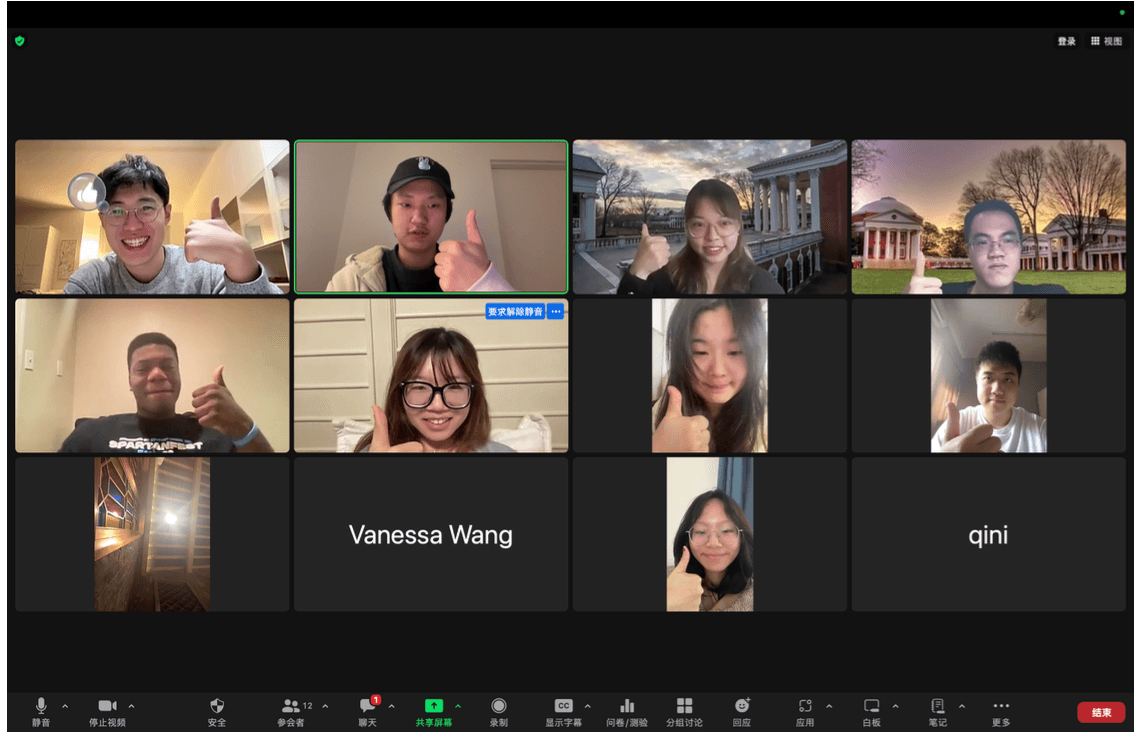
Dec 22, 2023 · First team meeting over Zoom — UVA, SJSU, Harvard
The first character designs followed the research exactly — and landed completely flat. Users recognized them but felt nothing. That gap between what people describe and what actually moves them became the defining design lesson of this project.
The Fortune Teller wasn't arbitrary — she was the answer to a real behavioral pattern: users turning to AI not for conversation, but for guidance and meaning. Both characters were scrapped and rebuilt from scratch, leading with personality, backstory, and emotional register.
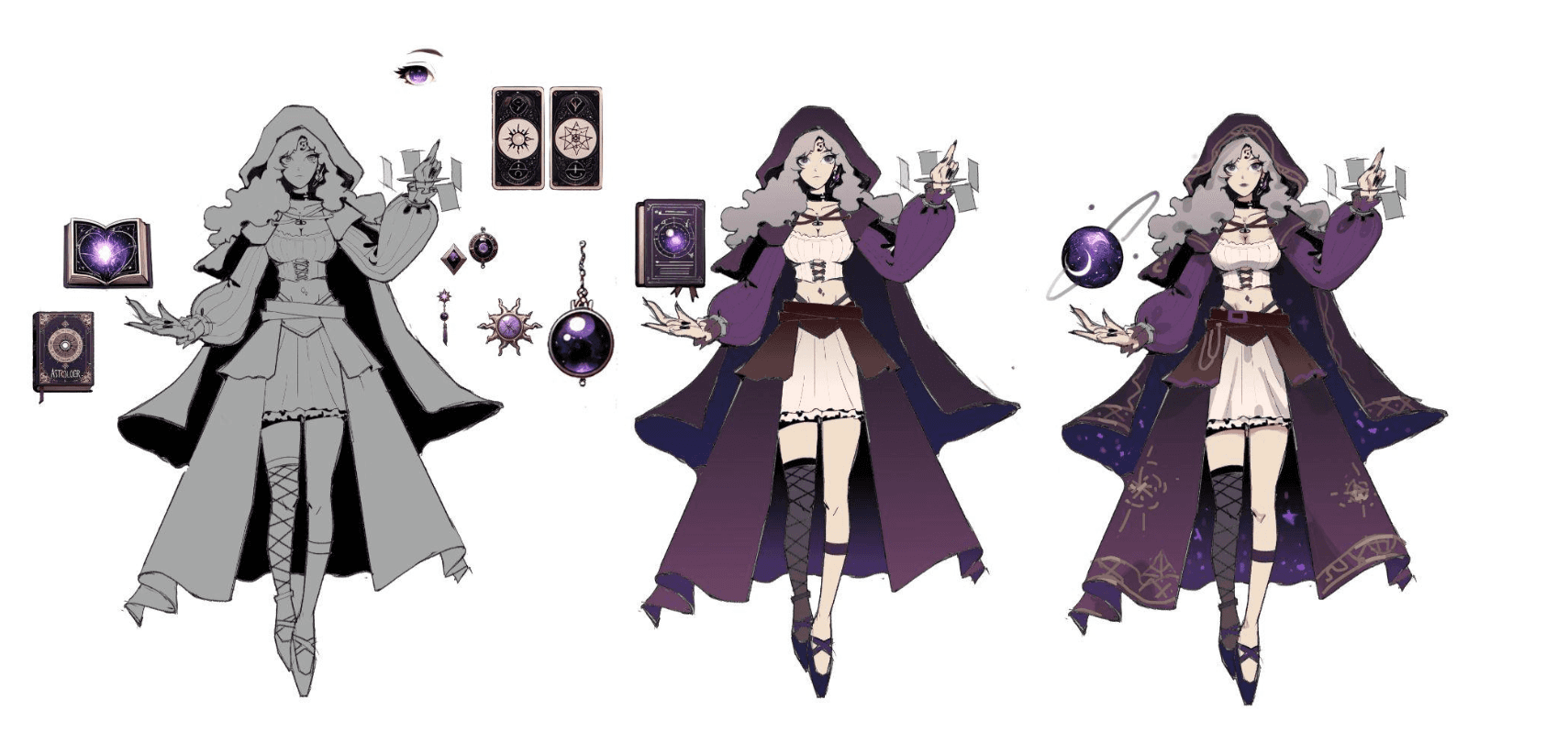
Fortune Teller — full design pipeline: sketch → greyscale → color
300 surveys.
One real insight.
300 surveys across US universities surfaced the real insight: users didn't want more AI capability — they wanted to feel seen. Anime enthusiasts were underserved by every existing product. The team narrowed hard: stop competing with Character AI head-on, own the niche entirely.
Stop competing with Character AI. Own the niche entirely.
Ship the world
before the app
When dev timelines slipped, the team shifted to IP-first marketing — weekly anime comic drops on TikTok, a Discord built around the characters. By launch, 130+ seed users were already emotionally invested. Emotional PMF was validated before the interface existed.
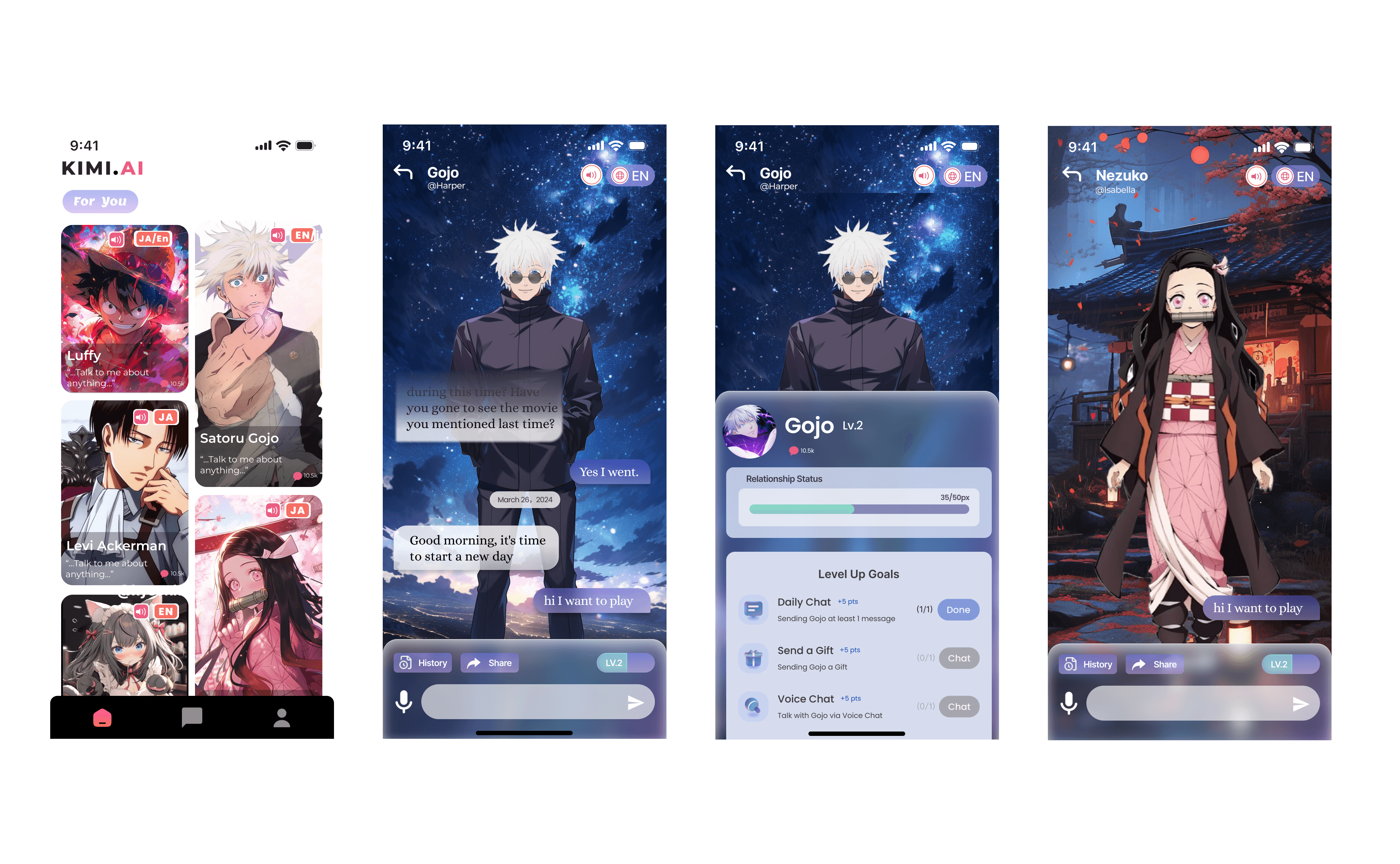
Snippets of User Interface and Game Interface iteration process.
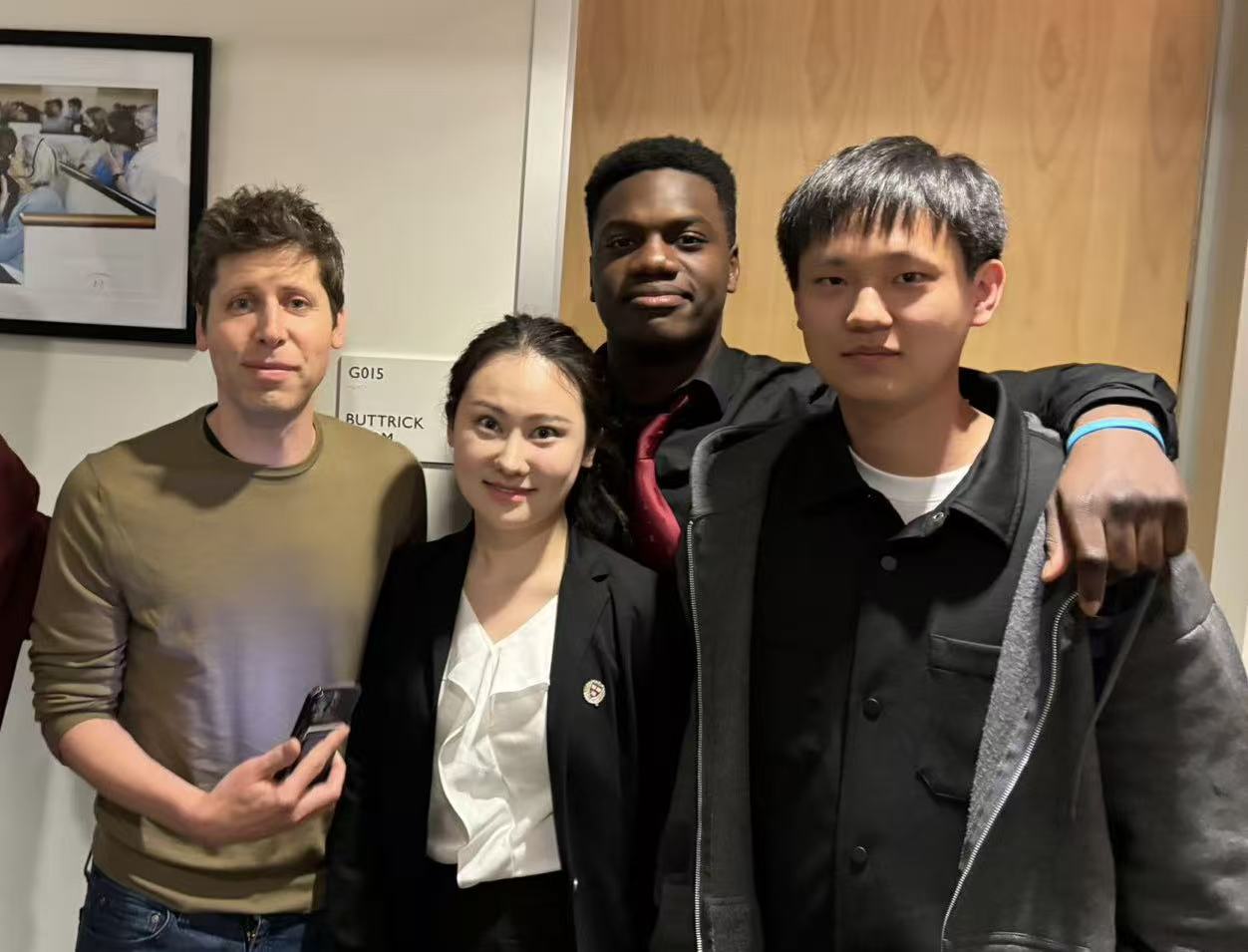
With Sam Altman after the pitch
On May 1, 2024, the Kimi team pitched at Harvard to Sam Altman, CEO of OpenAI — one of six founding teams selected from 270 submissions, competing for a $100K+ investment in a field spanning defense, research, and enterprise AI.
Getting into that room required more than a good idea. The pitch was built on a clear story: a niche deeply understood, a live product already in users' hands, and a design philosophy that bet on emotional authenticity over feature breadth.
Kimi was my first time seeing the full arc of a product — from a blank Figma file to something real people downloaded and talked about. It changed how I think about design: not as a discipline that sits downstream of decisions, but as something that shapes them from the start.
Working 0→1 meant the design work was inseparable from the business thinking — research, positioning, character strategy, pitch narrative all lived in the same room. My background across technology and design let me move between those conversations without losing either thread.
The bigger lesson was that design is never the center of things. A product gets built when engineering, research, and strategy are all pulling together. My job was to translate between disciplines and keep the user's perspective in the room — especially when it wasn't otherwise represented.